

By Maya Ellison ·
How Often Should You Dermaplane? Frequency by Skin Type
Every dermaplaning guide covers the angle and the strokes. Very few tell you when to pick the razor up again, which is a shame, because trouble almost never comes from one bad session. It comes from a perfectly good session done too soon after the last one.
So this article is only about timing. The angle, the skin tension and the stroke direction are all in how to dermaplane at home, and if you are not yet sure the technique suits your skin, start with is dermaplaning safe.

What decides your frequency
Three things set your interval, and none is the same from one person to the next. How fast your peach fuzz comes back, which is your own hair cycle. How much surface exfoliation your skin is comfortable with. And everything else you already put on your face.
Only the first is visible in the mirror, and that is the trap. Fuzz reappearing is a cosmetic cue, not a green light. The exfoliating half of dermaplaning is the part you cannot see, and it is the part worth pacing around.
Frequency by skin type
Here is how I would set a starting point for a friend, based on how different skin tends to behave rather than on any clinical rule. The middle column is where to begin, the right column is what tells you to adjust.
| Skin type | Comfortable starting rhythm | What tells you to slow down |
|---|---|---|
| Normal or combination | About once a week | Tightness that lingers into the next day |
| Oily | About once a week | Redness that outlasts the first hour |
| Dry | Every two weeks, sometimes longer | Flaking that gets worse rather than better |
| Sensitive or reactive | Every two to three weeks, after a patch test | Any stinging when you apply your usual moisturizer |
| Thinner or mature skin | Every two weeks, very light hand | Skin feeling raw rather than smooth |
Be clear about what that table is. It is a comfort guide from someone who has tested a lot of facial razors, not medical guidance, and this site holds no dermatological credential. If you have a diagnosed skin condition, are on prescription skincare, or your skin simply does not behave like any row above, a dermatologist's answer beats this table every time.

Signs you are going too often
Your skin gives you the feedback before any calendar does. Tightness still there the next morning, redness that outlasts the first hour, flaking that gets worse instead of better, a sting from a moisturizer that never used to sting, or nicks in a spot that never used to nick. Any of those means stretch the interval, not push through it.
Spacing sessions out is usually the whole fix. But if irritation does not settle, or a patch stays sore or looks infected, that is no longer a frequency question. Stop and have a professional look at it.
Can you dermaplane too rarely?
No, and this is the reassuring half of the answer. Your skin does not become dependent on the habit, the fuzz simply returns on its normal cycle, and going a month or two without changes nothing except how you look in between. Long gaps do not make hair come back coarser either, which is covered properly in dermaplaning benefits. The cost of waiting is cosmetic and entirely yours to weigh.

How your routine changes the interval
Dermaplaning is surface exfoliation, so it has to be counted alongside anything else in your routine that exfoliates rather than treated as a separate category. Retinoids, glycolic or salicylic acids and scrubs all work on the same layer. Stack them on the same day and you are asking a lot of one surface.
Most people settle on keeping strong actives off the day they dermaplane, and on sunscreening properly afterwards since freshly exfoliated skin is more exposed. If you are on a prescribed treatment, including isotretinoin or a prescription retinoid, do not set your own interval from an article. Ask whoever prescribed it.
Does it differ by zone?
In practice, yes. Brow strays reappear faster than cheek fuzz and the area you touch is tiny, so plenty of people tidy their brows more often than they do a full face pass. That is a grooming pass with an eyebrow razor, not an exfoliating one, and the two do not need the same calendar.
The cheeks and jaw are the opposite case: broadest surface, most passes, so they should set the pace for a full session. Anyone using the same tool as an everyday facial razor for women tends to land on frequent small brow touch-ups and a slower full pass.

When to skip a session entirely
Some days the right interval is no interval. Skip the pass if you have active acne or a breakout in the area, a rosacea flare, eczema or psoriasis on the spot, sunburn, or skin that is irritated, broken or healing from a nick. Never pass over anything raised, such as a mole or a skin tag. That is not about frequency: it is about skin not being in a state to be exfoliated at all, and the full list is in is dermaplaning safe.
What frequency does to your blades
The more often you dermaplane, the faster the edge wears, and a dull blade is what drags and irritates. A tighter interval quietly raises how often you rotate to a fresh razor. One verified buyer, Jessica M., wrote: "Does it's job, doesn't feel dull". That is the feel you want back every session, and the moment a razor tugs instead of gliding it should be retired, whatever the calendar says.
This is the argument for a multipack rather than a single razor, and it also makes it easy to keep one razor aside purely for brows so your face blade stays crisp.
Money-back window on every order, which is roughly two to four sessions at a normal interval
— Peachly returns policy, 2026
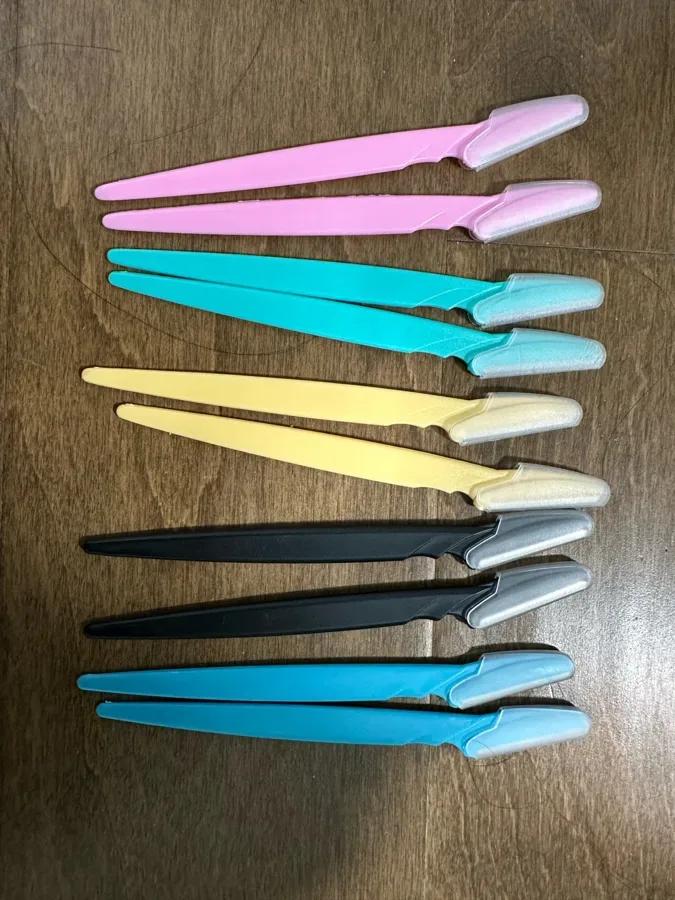
Assorted shades in every multipack, so one razor can be kept aside for brows
— Peachly product spec, 2026
Standard delivery window, worth planning around if you want to keep a steady rhythm
— Peachly shipping policy, 2026
The short version: start at once a week if your skin is normal or oily, every two weeks if it is dry, sensitive or thin, then let the way your skin feels the next morning move you one way or the other. To compare tools first, read the best dermaplane razor guide or the dermaplane vs shaving breakdown, see how we test, and read buyer notes on the reviews page.
Frequency questions, answered
Can I dermaplane every day?
No. Daily passing leaves your skin no time to settle between sessions, and that is where tightness, lasting redness and small nicks start. If daily removal feels necessary to you, that is worth raising with a dermatologist rather than solving with a blade.
Is twice a week too often?
For most skin it is on the aggressive side, and for dry or reactive skin it is too much. The test is simple: if your skin has fully settled since the last pass, twice a week may sit fine. If tightness, flaking or redness are still there, you are asking it to catch up while you keep going.
How long before an event should I dermaplane?
People who dermaplane regularly tend to leave a day or two so any faint redness has time to fade, rather than doing it an hour before they get ready. If it is your first ever pass, try it on an ordinary evening instead and see how your skin responds.
Does waiting longer between sessions make the fuzz grow back thicker?
No. Interval has nothing to do with regrowth. Cutting hair at the surface does not touch the follicle, which is what sets thickness and color, so the fuzz returns the same whether you wait one week or six.
Maya Ellison · Beauty writer & at-home dermaplaning enthusiast
Maya has tested dozens of facial razors and writes practical, honest at-home skincare guides. She is not a dermatologist, so for any medical skin concern she points readers to a professional.