
By Maya Ellison ·
Facial Hair Removal for Older Women: What Works on Mature Skin
Most facial hair advice is written for women in their twenties, about peach fuzz and makeup prep. Then the conversation stops, as if faces stop changing. They do not: hair that was soft for decades can turn wiry on the chin, the skin underneath becomes thinner and drier, and methods that once felt fine start to feel harsh. That is not a problem to apologize for. It is a change in the material, and it calls for a change in the method.
So this guide does one specific thing: it compares the common removal methods on mature skin rather than on skin in general, then shows the small technique adjustments that make facial shaving comfortable on a face that has earned some softness. If dermaplaning itself is new to you, the guide to dermaplaning explains what the pass removes and who it suits; this article is about what changes with the decades.
Why facial hair changes with the years
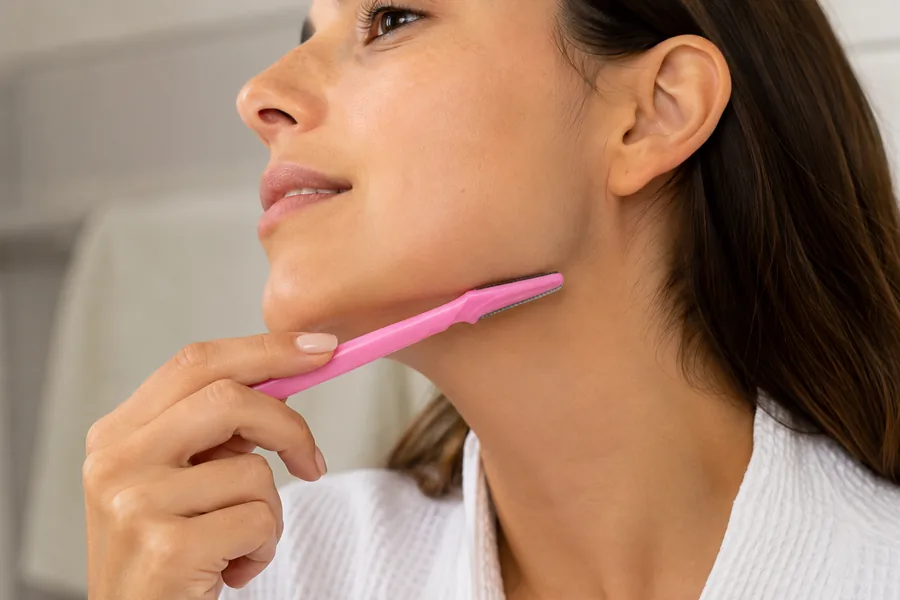
The pattern is familiar to almost every woman past fifty, even if nobody talks about it: a coarse hair on the chin that was never there before, then a second, then a few along the jaw. The upper lip may darken slightly while the rest of the face keeps its usual soft, fair fuzz.
The mechanism is hormonal and entirely ordinary. Estrogen declines around menopause while androgens carry on, and that balance is what certain follicles listen to. Follicles on the chin and jaw are among the most androgen-sensitive on the face, so they are the first to switch from producing fine, downy hair to producing something thicker and faster.
One boundary before anything else, and it matters: if new growth is sudden, rapid or heavy, or arrives alongside other changes your body is showing you, take it to your doctor rather than to a grooming article. Noticeable excess growth has medical names and medical causes, and it deserves a professional look, not a razor recommendation. Everything below is about the ordinary, gradual kind that most women meet eventually.
What mature skin asks of a removal method
Mature skin is not fragile, but it is different in three ways that decide which methods feel good and which do not. It is thinner, so anything that pulls or drags transmits more force to the layers underneath. It is drier, because oil production falls over the years, so it recovers more slowly from anything abrasive. And it has less spring, so a method that stretches or lifts the skin surface works against it rather than with it.
Put together, that gives you a short checklist. A method suited to mature skin should work at the surface rather than pulling from the root, let you control the pressure yourself, cover an area without repeating trauma on one spot, and leave the skin calm enough to moisturize immediately afterwards.
The methods, compared on mature skin
Every method here removes hair. The question is what each asks your skin to tolerate in exchange, and that is where age changes the ranking.
| Method | How it removes | On mature skin | Suits best |
|---|---|---|---|
| Facial shaving / dermaplaning | Guarded blade sweeps hair at the surface | No pulling, pressure fully in your control | Chin, jaw, cheeks, upper lip |
| Tweezers | Pulls single hairs from the root | Fine occasionally; repeated plucking tugs thin skin | One or two isolated hairs |
| Waxing | Strips hair and surface cells in one pull | Aggressive: it lifts skin as well as hair | Skin that still has full elasticity |
| Threading | Twisted thread catches and pulls rows of hair | Gentler than wax, still root-pulling; usually a salon trip | Defined lines, occasional resets |
| Laser / IPL | Light heats the pigment in the hair shaft | Cannot see white or gray hair at all | Dark hair on lighter skin, professionally assessed |
Two clarifications so the table is used fairly. Tweezers keep a place in every routine for the single stubborn hair; the problem is scale, because plucking a whole cluster means pulling the same patch of thin skin dozens of times. And threading remains a fine craft for brow lines, which is a shaping job more than a removal job.
Why laser and IPL miss white and gray hair
This is the detail that changes the decision most after sixty, and the least often said plainly. Laser and IPL do not sense hair. They sense melanin, the pigment that makes hair dark, and they work by heating that pigment inside the shaft until the follicle is discouraged from producing more.
A hair that has turned white or gray has little or no melanin left. The light passes through it with nothing to lock onto, which is why these treatments are routinely described as ineffective on white and gray hair. It is not a matter of finding a stronger machine or a better operator; the target itself is gone. Since the coarse hairs that arrive after menopause are often the same ones losing their color, many women discover this just as the treatments become tempting.
If your new growth is still dark, light-based removal may remain on the table, and a professional consultation is the place to find out. For hair that has silvered, the realistic choices are the mechanical ones above, and the one that pulls nothing is the one thin skin tolerates best.
Where a guarded facial razor fits
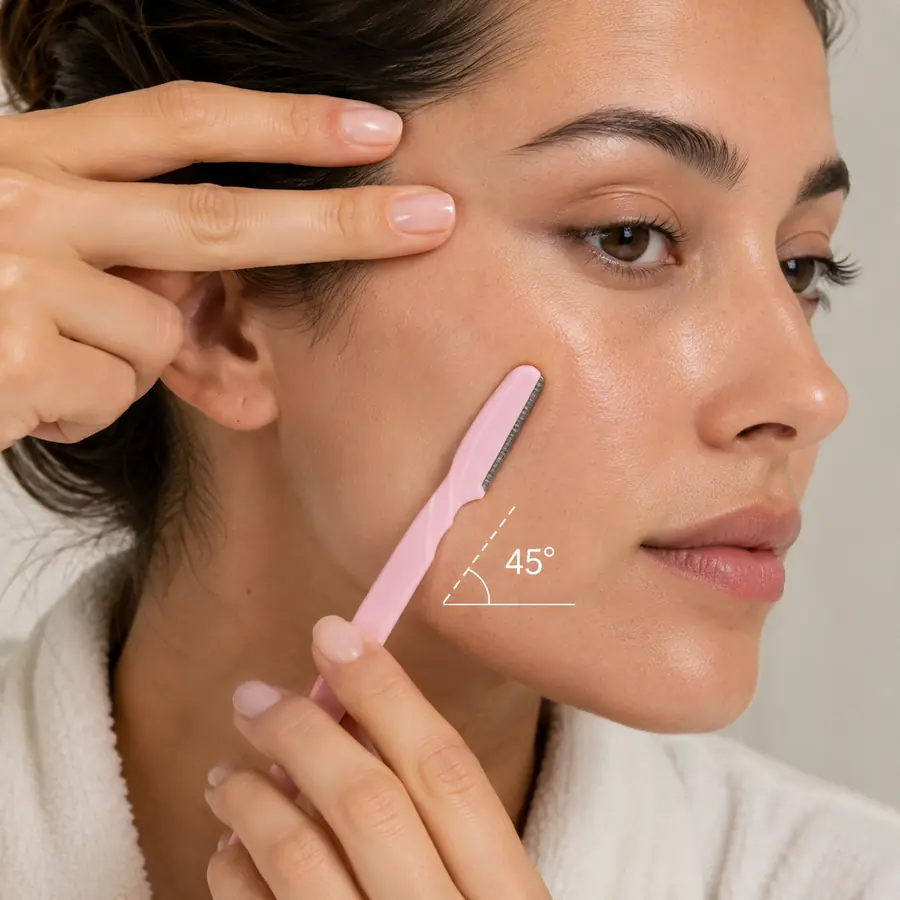
Facial shaving is the method that meets all four points on the checklist. The blade works entirely at the surface, so nothing is pulled from the root and nothing tugs. The pressure is yours, stroke by stroke, which matters most on a thinner surface. One pass covers an area instead of attacking it hair by hair. And because the skin is not stripped, moisturizer can go on the moment you finish.
A guarded dermaplane razor adds two things a plain blade does not. The safety guard keeps the edge at a consistent, shallow presentation to the skin, so a light hand is enough. And a stainless blade held at about a 45-degree angle sweeps away dead surface cells along with the hair, the gentle exfoliation that leaves mature skin brighter rather than merely cleared. The full comparison with an ordinary body razor is in dermaplaning vs shaving, and the short version is that the tool and the angle are designed for exactly this job.
The objection that keeps the most women from trying it is the fear that shaved hair returns thicker or darker. It does not, and the facial razor for women page answers it properly, with the medical source named, in its FAQ. A blade cuts the shaft; it has no way to reach the follicle where thickness and color are decided. What changed the hair on your chin was hormones, not any razor.
Technique adjustments for thinner skin
The standard technique still applies: clean, dry skin, a shallow angle, short strokes in the direction of growth. What changes on mature skin is the supporting detail, and the adjustments are small.
Steady the skin, do not stretch it. Younger guides say to pull the skin taut. On skin with less spring, hard stretching is uncomfortable and unnecessary. Instead, rest your free hand above the area and ease it gently smooth, just enough that the blade meets an even surface. Along the jaw, tilting your chin up and slightly away does most of the work for you.
Let the coarse hairs take an extra light pass, not extra pressure. A wiry chin hair resists more than peach fuzz, and the instinct is to press. Resist it. Pressure is the one thing that turns a surface pass into irritation on thin skin. If a hair remains after a light stroke, come back over it once more, still lightly; the grip, angle and stroke length are covered in how to use a dermaplane razor.
Space sessions further apart. Drier skin rebuilds its surface more slowly. Around every two weeks with a very light hand suits most thinner or mature skin, and the full timing logic is in how often should you dermaplane.
Moisturize immediately, every time. On drier skin this is not aftercare, it is half the point. A freshly swept surface takes cream beautifully, and sealing it in the first minutes keeps the next fortnight comfortable.
A calm routine, zone by zone
In practice a session is short, because you are usually addressing zones rather than the whole face. The chin and jawline take a few supported strokes each, working downward with the growth. The upper lip is a small, careful zone: short strokes angled away from the lip line, with the skin eased smooth from above. Cheeks, if you do them at all, are the easy part and mostly about evenness rather than coarse hair.
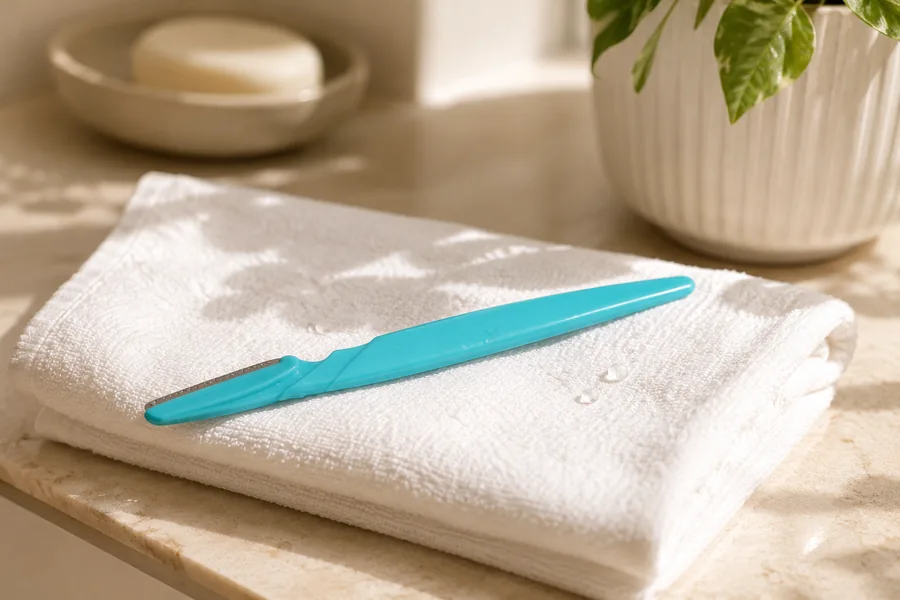
Brow strays are their own job with their own geometry, and a razor kept aside for brows stays sharper for the fine work. Keep separate razors for separate jobs; an assorted multipack makes that effortless — the colors do the bookkeeping.
Skin that is broken, irritated or mid-flare sits out the session, on any face; the full list of situations that deserve caution, and the aftercare that protects the result, are in is dermaplaning safe. If any patch keeps reacting no matter how gentle the pass, that is a conversation for a dermatologist, who can see your skin rather than describe skin in general.
Average rating left by verified buyers of the manual razors
— Peachly verified reviews, 2026
Assorted shades in every multipack, so a razor can be kept aside for brows or for travel
— Peachly product spec, 2026
Money-back window on every order, enough for a session or two on your own skin at a gentle interval
— Peachly returns policy, 2026
The short version: the hair changed, so the method should change with it. Skip what pulls, skip what cannot see silver hair, and use a guarded blade with a lighter hand and a longer interval. Verified buyer Jessica M. put it simply — "Does it's job, doesn't feel dull" — and more buyer reports are on the reviews page. The reusable multipacks are on the dermaplane razor page.
Mature skin questions, answered
Are a few chin hairs after menopause normal?
Very. As hormone balance shifts, some follicles along the chin and jaw start producing coarser hair, one of the most common changes women notice in their fifties and beyond. If new growth arrives suddenly, spreads fast or feels heavy, mention it to your doctor. For the usual scattered hairs, a grooming routine is all it takes.
Should I pluck or shave coarse chin hairs?
Both remove the hair, so it comes down to how many there are. Tweezers suit one or two isolated hairs. Once there is a cluster, plucking means repeated pulling on the same patch of thin skin, and a guarded razor clears the area in a few light strokes without any tugging.
Can I dermaplane skin that has lost firmness?
Yes, with two adjustments. Support the area with your free hand so the blade meets a smooth, gently steadied surface rather than pressing skin taut, and keep the pressure feather-light. Skip any patch that is broken, irritated or healing, as you would on any skin.
How often should mature skin be dermaplaned?
Less often than the standard advice. Around every two weeks suits most thinner or drier skin, with a very light hand each time. If your skin feels raw rather than smooth the next morning, stretch the interval further.
Maya Ellison · Beauty writer & at-home dermaplaning enthusiast
Maya writes practical, plain-spoken at-home skincare guides. She is not a dermatologist, so for any medical skin concern she points readers to a professional.